
The Brew-Hammond Energy Centre (TBHEC) in collaboration with the Climate Compatible Growth (CCG) Ghana Network at the Kwame Nkrumah University of Science and Technology (KNUST), has organised the second edition of its CLEWs Capacity Building Workshop to equip participants with critical skills in Climate, Land-Use, Energy and Water Systems (CLEWs) modelling.
The two-day workshop, hosted at the Petroleum Building on KNUST campus, forms part of ongoing efforts to strengthen human capacity for integrated resource planning and sustainable development in Ghana.

The Director of the Brew-Hammond Energy Centre, Prof. David Ato Quansah, noted that modern energy challenges demand interdisciplinary collaboration, stressing that no single field can adequately address the complexities of today’s energy systems.
“Energy has become quite complex. You cannot address it from a single discipline. It requires engineers, planners and scientists working together,” he noted.
Prof. Quansah underscored the interdependence between energy, land and water systems, stressing that effective planning must account for these linkages, particularly in the face of climate change.
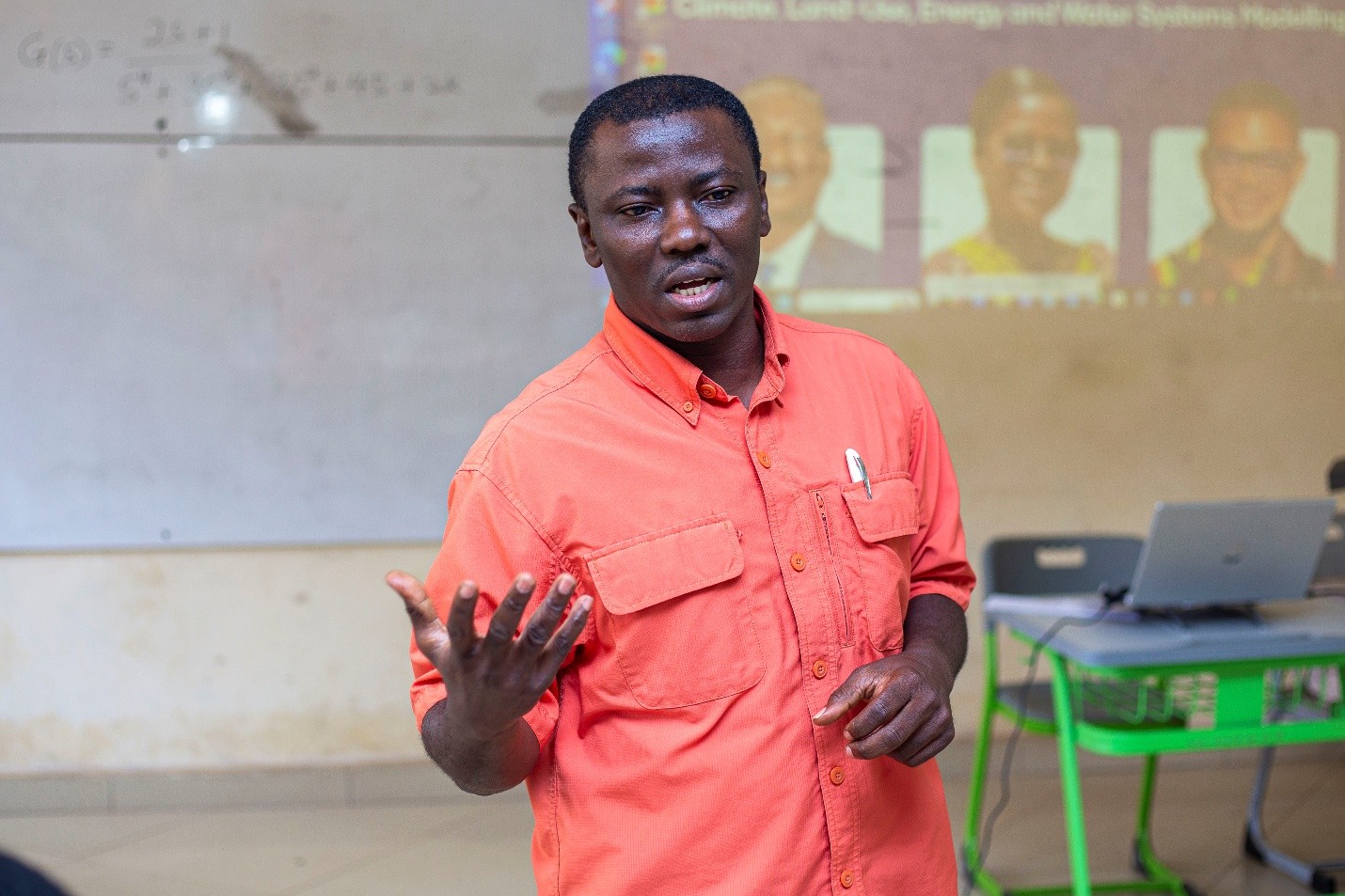
The Coordinator of the CCG Ghana Network, Prof. Joseph Oppong Akowuah, encouraged participants to take the training seriously, describing CLEWs modelling as a valuable tool for policy, research and industry.
“Those who understand these complex integrations stand a strong chance of contributing meaningfully at the policy and technical level,” he said.
He also noted that the programme positions participants for future opportunities, including international training platforms in energy planning and modelling.

One of the facilitators, Dr. Ernestina Annan explained that the workshop focuses on analysing trade-offs and synergies within resource systems, enabling participants to test scenarios and make informed policy decisions.
“This training allows us to test scenarios and evaluate policy options by understanding the interlinkages between energy, land and water,” she explained.
Also facilitating the session, Dr. Jerome Lavie noted that the training has been structured to give participants a practical understanding of CLEWs modelling and its application in research and national development planning.
“At the end of the training, participants should be able to apply these models in their research and contribute to Ghana’s energy transition goals,” he said.
Participants gained practical skills in modelling the climate–land–energy–water nexus (CLEWs) systems, as well as in developing scenarios based on Ghana’s energy transition plans. At the end of the workshop, participants were awarded certificates of participation in recognition of their engagement and successful completion of the training.