
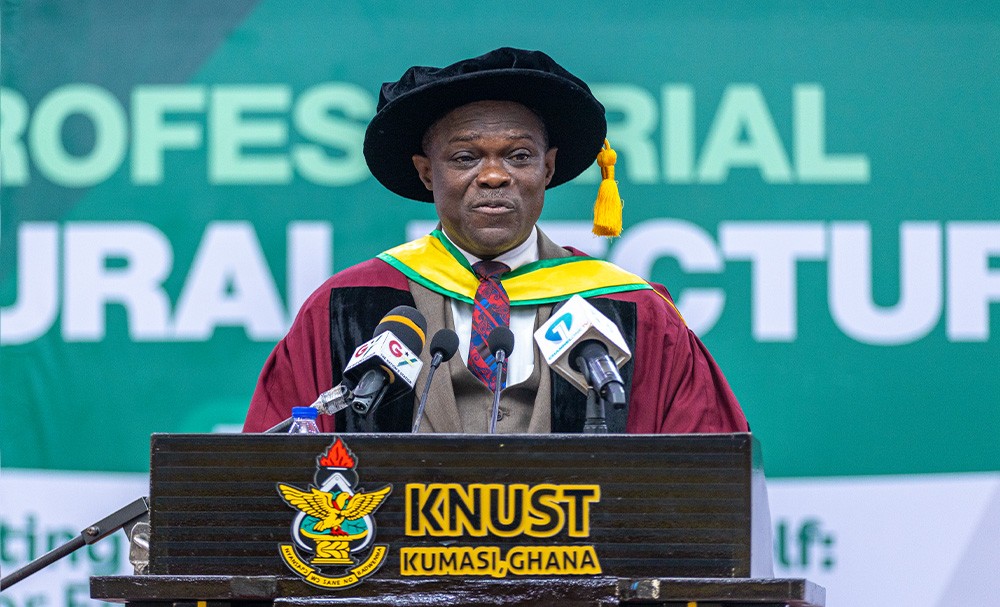
Professor Samuel Amos Abanyie, a Professor of Architecture and a Fellow of the Brew-Hammond Energy Centre (TBHEC), has called on the Energy Commission of Ghana to partner with universities to develop clear national guidelines for Building Energy Performance Reports, aimed at improving building standards and indoor environmental quality across the country.
Speaking at his inaugural lecture on the topic “Protecting Humanity from Itself: Indoor Environmental Quality in an Era of Climate Stress,” Professor Abanyie raised concerns about the absence of energy performance considerations in Ghana’s building permit processes.
“In Ghana, building permits rarely account for energy performance, leaving occupants exposed to unnecessary costs and uncomfortable indoor conditions,” he stated.
He explained that this regulatory gap has resulted in buildings that, although compliant with existing laws, often fail to meet basic standards of comfort, ventilation, and energy efficiency. According to him, this not only increases energy consumption but also poses risks to occupant health and productivity.
Professor Abanyie emphasised that addressing these challenges requires a coordinated national approach, driven by both policy and research. He proposed that the Energy Commission of Ghana work closely with academic institutions, including KNUST, to develop standardised guidelines for Building Energy Performance Reports.
Such reports, he noted, should be integrated into the development permit process to ensure that energy efficiency is embedded in building design from the outset, rather than treated as an optional consideration.
He further expressed concern about the growing trend of equating modern architecture with visual appeal rather than performance.
“Buildings that suffocate, overheat, or contaminate are celebrated as modern, but they shouldn’t be,” he cautioned.
Highlighting the urgency of the issue, Professor Abanyie stressed that energy efficiency must be prioritised in the face of climate change and rapid urbanisation.
“Energy-efficient design is not a luxury; it’s a necessity for a rapidly urbanising and climate-stressed Ghana,” he said.
He called on architects, engineers, and developers to adopt passive and low-energy cooling strategies in their designs, noting that thoughtful planning can significantly reduce long-term energy costs, environmental impact, and health risks.
Professor Abanyie also urged policymakers to establish enforceable standards that will drive compliance and ensure that sustainable, health-conscious buildings become the norm across Ghana.