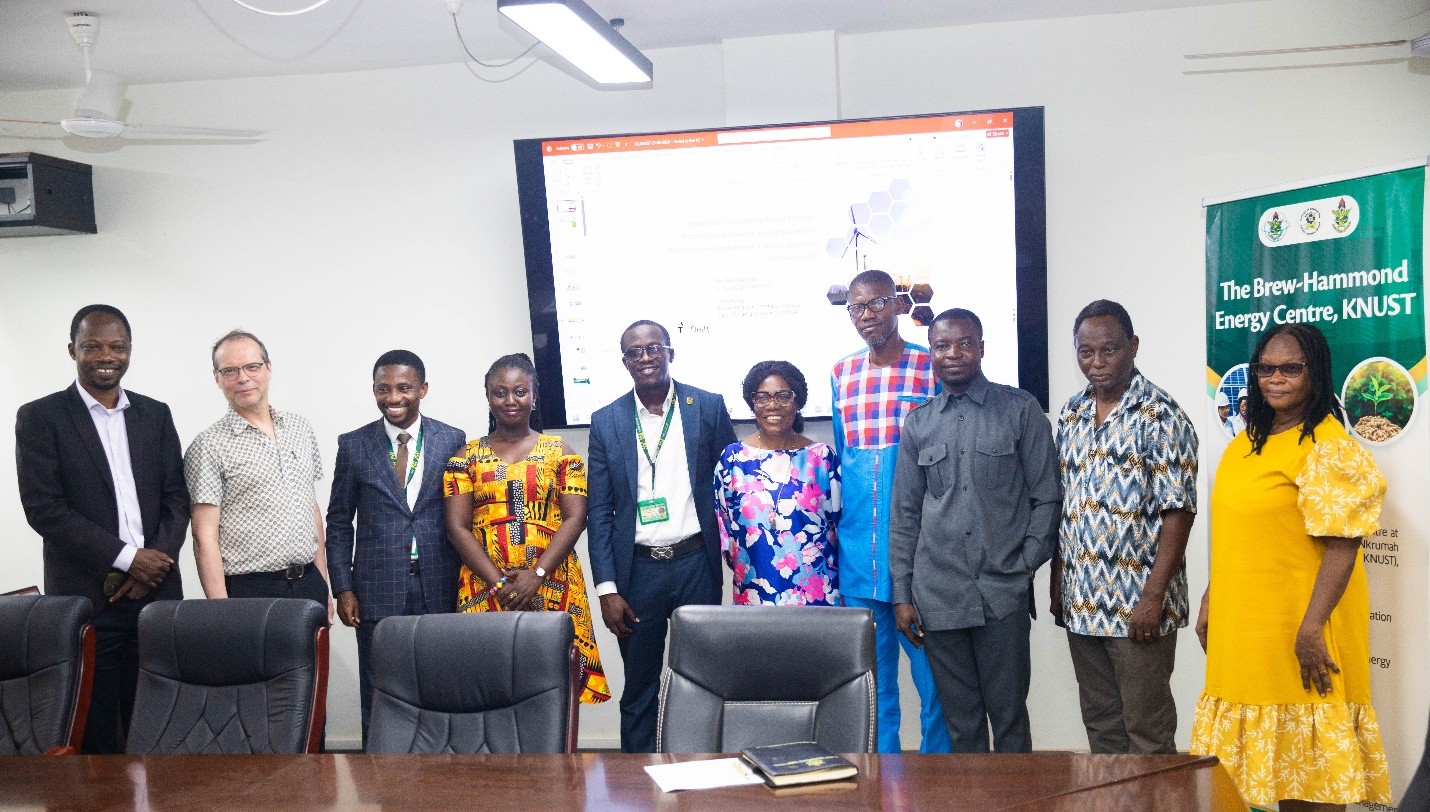
The Brew-Hammond Energy Centre (TBHEC) at the Kwame Nkrumah University of Science and Technology, Kumasi (KNUST) in collaboration with Delft University of Technology, have held a seminar on the pathway towards the transdisciplinary energy transition research and education.
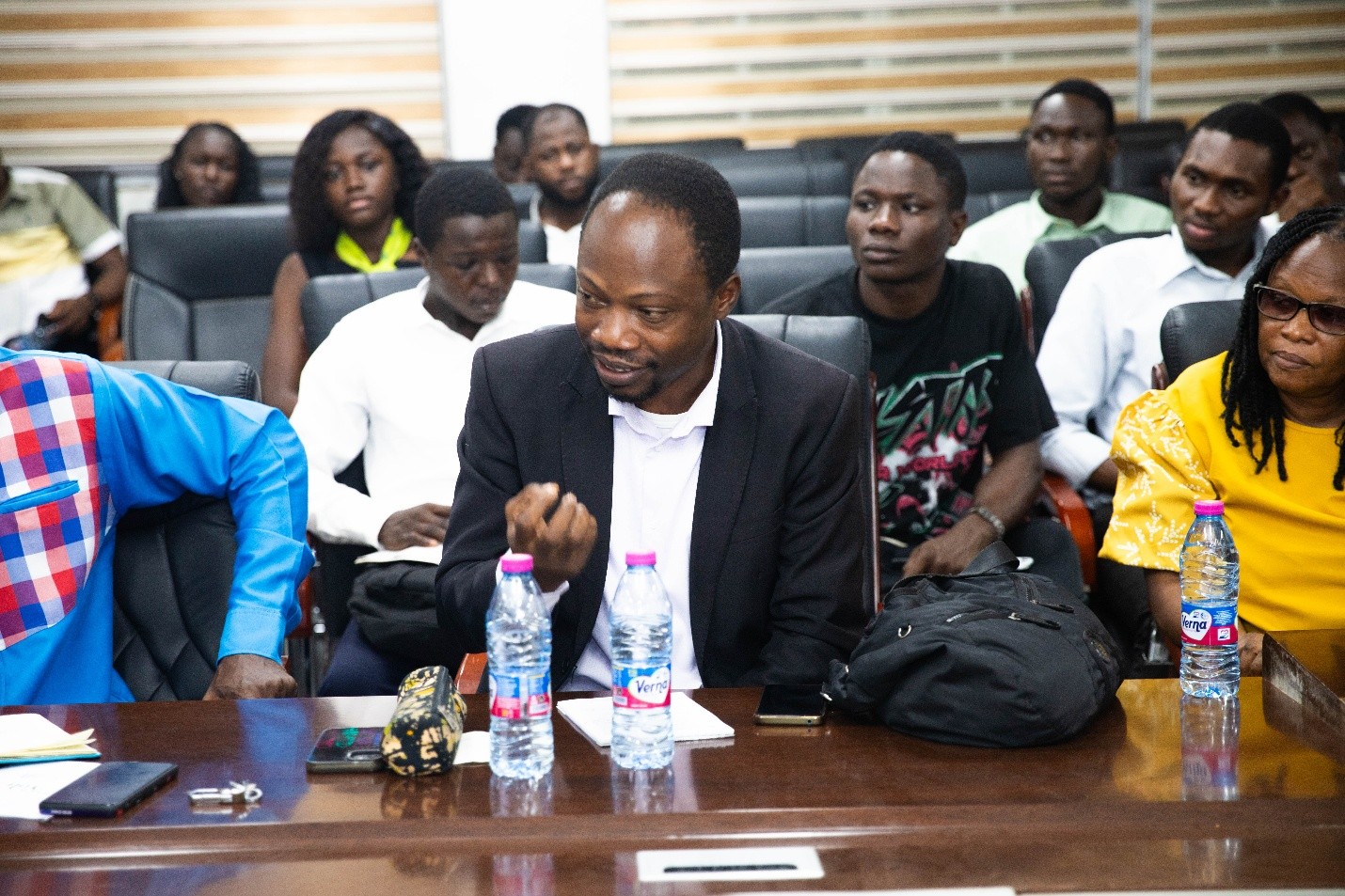
Professor David Ato Quansah, Director of The Brew-Hammond Energy Center, explained that the meeting was convened to strengthen ongoing collaboration between the two institutions while advancing joint research initiatives, highlighting several joint initiatives undertaken, including studies on diesel consumption.
He emphasized the need for deeper interdisciplinary engagement in addressing complex global challenges, noting that the visit from TU Delft provided a platform to promote transdisciplinary research.
“The challenges we face do not come packaged as mechanical engineering, political science, or accounting problems. They require an all-hands-on-deck approach,” he said.
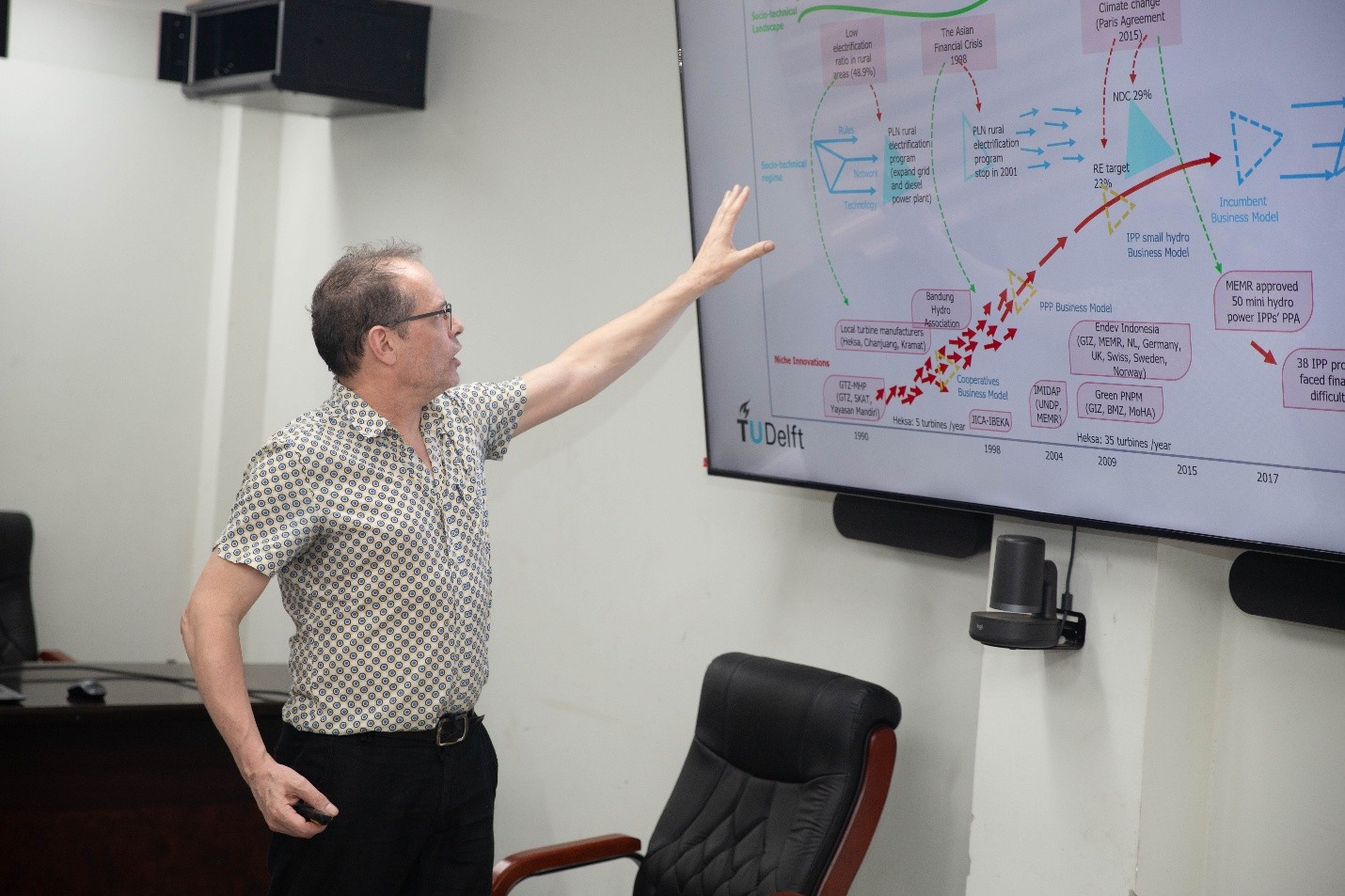
Dr. Jaco Quist, Assistant Professor at TU Delft’s Faculty of Technology, Policy and Management, said the visit aimed to advance discussions on transdisciplinary approaches to energy transition research, drawing on experiences from projects in Indonesia and Ghana.
He described his faculty as a hub for interdisciplinary and systems-oriented research, integrating engineering, social sciences, and the humanities to address complex societal issues.
“We work at the intersection of disciplines because real-world problems are socio-technical and cannot be solved from a single perspective,” Dr. Quist explained.
He stressed that energy transition challenges require both technical innovation and an understanding of social actors and values.
“You need to understand not only the technology, but also the stakeholders involved and the social values at stake, especially if you want a just energy transition,” he said.
Dr. Quist further highlighted the importance of transdisciplinary research, noting that its impact extends beyond technical outcomes to building collaboration and shared understanding.
“It is not only about the results, but also about the process; building understanding, partnerships, and commitment, which are essential for real change,” he stated.
He also pointed to the use of the backcasting approach in designing sustainable futures, explaining that such methods encourage learning, collaboration, and long-term stakeholder engagement.
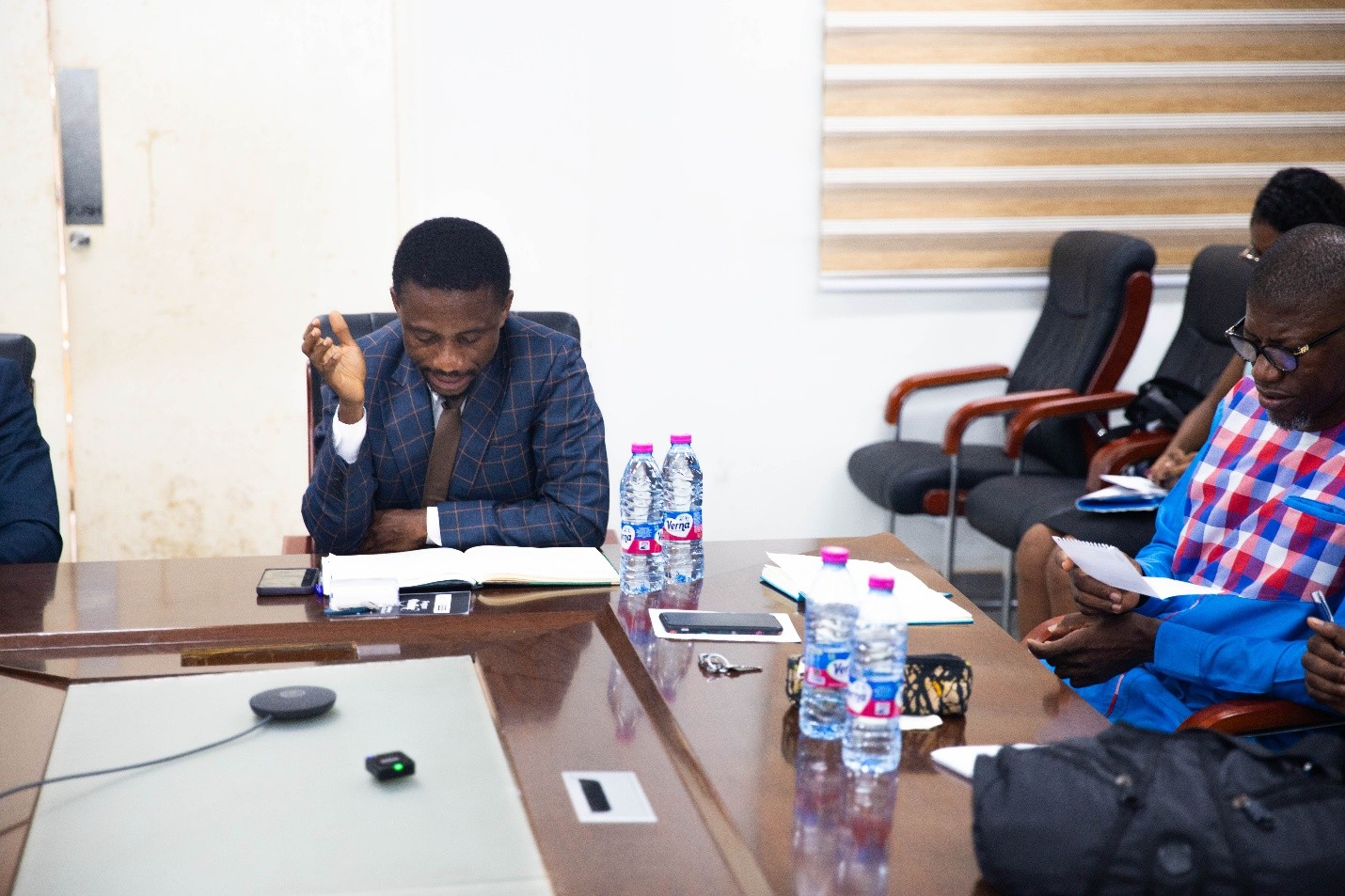
Professor Samuel Adu-Gyamfi, Vice Dean of the Faculty of Social Sciences, raised critical questions about sustainability within the context of institutional capacity and development pathways, particularly in relation to local realities.
He emphasized the importance of historical perspectives in shaping sustainability strategies and cautioned against one-size-fits-all approaches.
“When we go back into history, we may find useful lessons, not always formally theorized, but grounded in lived experiences, traditions, and even proverbs that helped preserve our ecosystems,” he noted.
Professor Adu-Gyamfi reaffirmed that interdisciplinary collaboration remains central to addressing sustainability challenges.
“It is through interdisciplinary engagement that we can arrive at meaningful solutions and chart a more sustainable path forward,” he stated.