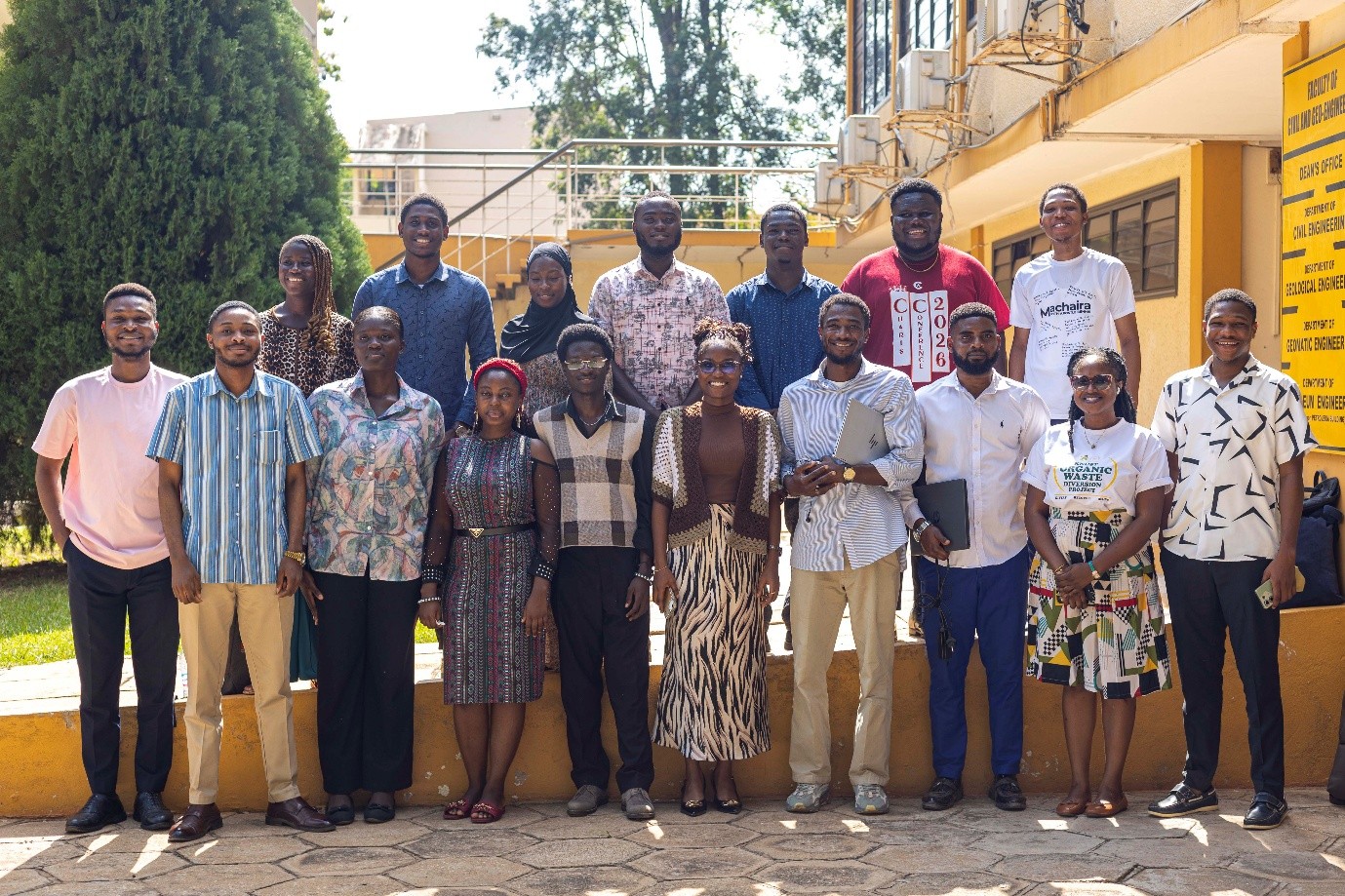
The Brew-Hammond Energy Centre, in collaboration with Climate Compatible Growth (CCG) Ghana Network, has organised a media and communication training session aimed at strengthening how energy research is communicated to the public.
The training, held on Thursday, March 19, 2026, at the Levine Conference Centre at KNUST, brought together research assistants to build capacity in news writing, project reporting, and basic photography.
Delivering the welcome address, the Director of the Centre, Professor David Ato Quansah, underscored the importance of effective communication in research.
“You have to be able to tell your story as an engineer,” he stated, adding that researchers must be willing to develop skills beyond their academic disciplines. He noted that such competencies are essential for engaging the public and demonstrating the value of research work.
He described the training as a continuous effort toward improving how energy-related issues are communicated clearly and concisely.
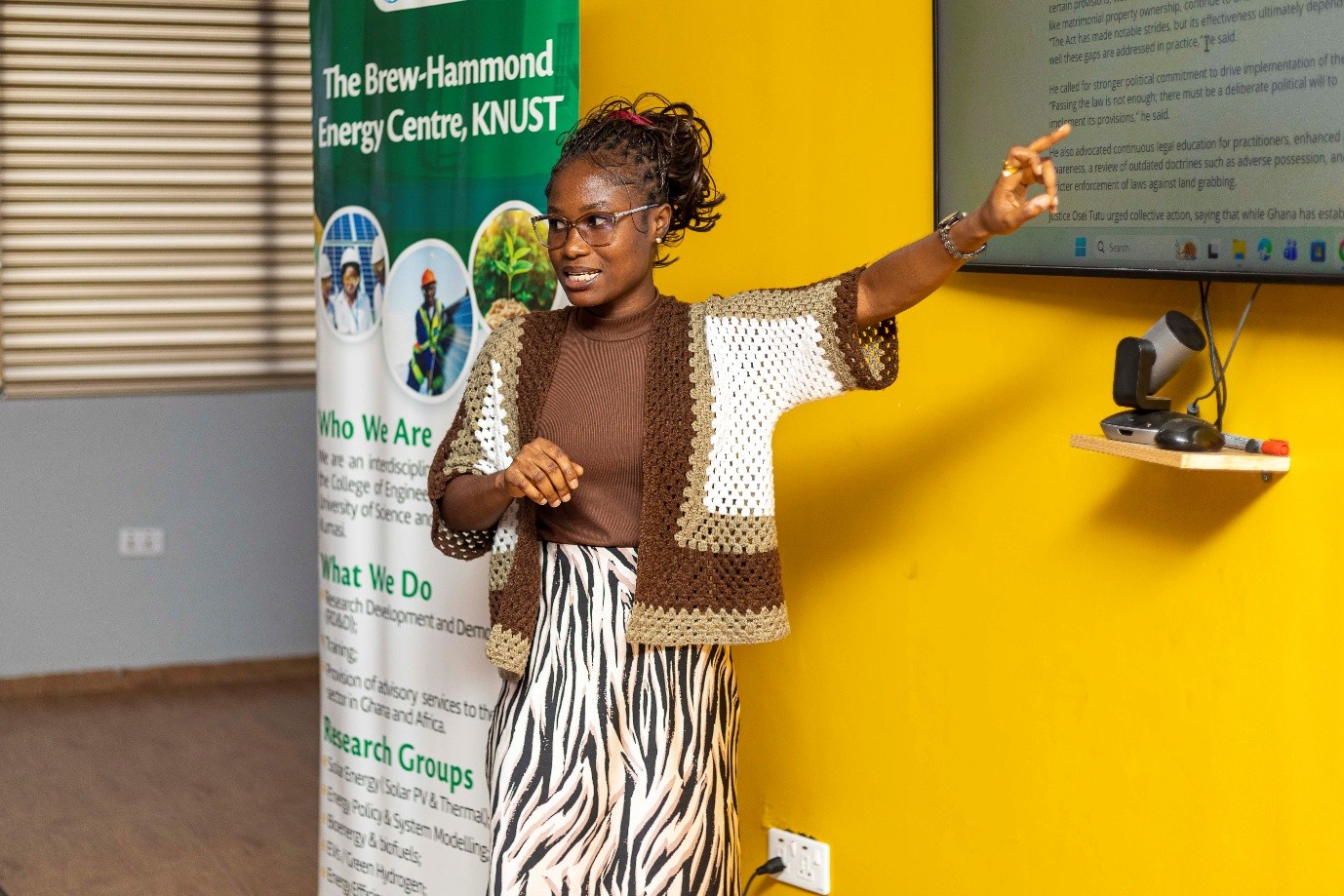
Facilitating the session, Abena Serwaa Gyamfi, Senior Administrative Assistant at the University Relations Office, KNUST and Communication Officer at the Centre, took participants through the fundamentals of news writing, explaining that news stories are factual accounts of events or research findings and become newsworthy when they are timely, impactful, relevant, and innovative. She highlighted the importance of structure in news writing, outlining key components such as the headline, lead, body, and conclusion, while emphasizing accuracy and credibility in reporting.
“Never change the meaning of a quote. Quotes are the voices of the people involved in the story, and as a writer, your responsibility is to present them exactly as intended without altering their meaning or context,” she said.
She stressed the relevance of the “5Ws and H” and how to effectively utilize them.
“A good story writer should understand the 5Ws and H; who, what, when, where, why, and how, and know how to apply them effectively to produce a complete, clear, and informative news story that the audience can easily follow,” she said.
In discussing effective research communication, Miss Gyamfi emphasized the importance of clarity and audience-centred messaging in ensuring that research achieves its intended impact.
“It is important to communicate research in a language that your audience can understand. If the people you are speaking to cannot relate to the language used, then the purpose of the research is defeated,” she said.
“You must clearly define the audience you want to reach and understand the kind of language that suits them. When your audience is able to consume and understand what you produce, then the goal of your research can truly be achieved,” she said. The training also featured a practical session where participants applied their learning through writing exercises, demonstrating their understanding of effective storytelling and reporting.
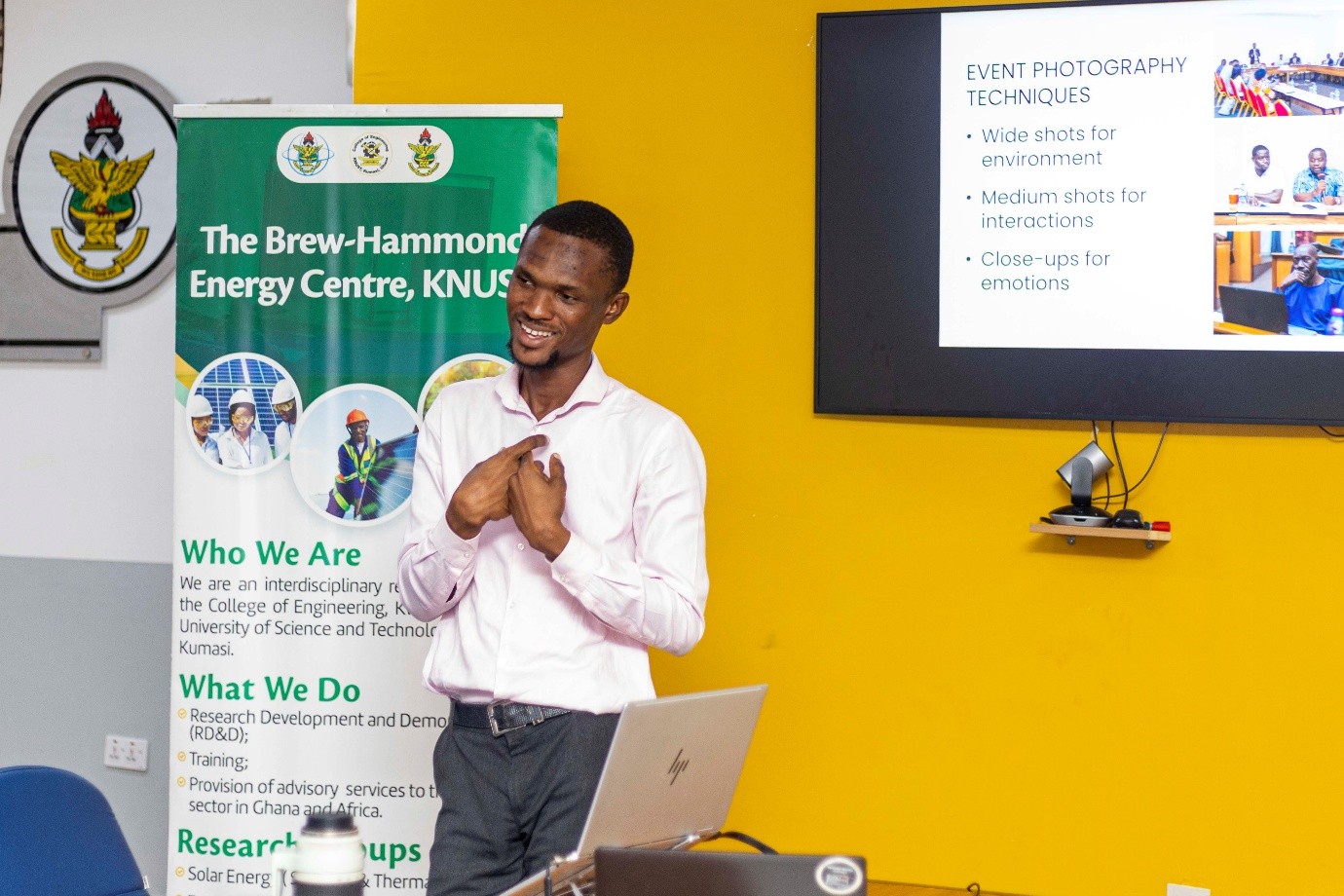
In a subsequent session, Isaac Kwaku Duah, Senior Technician at the University Relations Office, introduced participants to basic photography skills. He explained the importance of mastering key elements such as aperture, ISO, and shutter speed to achieve quality images. He emphasized the storytelling role of visuals, noting that “every photograph tells a story,” and encouraged participants to be intentional about the narratives their images convey.
The training forms part of ongoing efforts by the Brew-Hammond Energy Centre and Climate Compatible Growth to enhance communication capacity among researchers and improve public understanding of energy-related projects.