The book launch of the Professional Education for Renewable Energy in Ghana (ProREG) Project spotlighted the deep institutional transformation driven by ProREG across both the Kwame Nkrumah University of Science and Technology, Kumasi, (KNUST) and the University of Energy and Natural Resources (UENR).
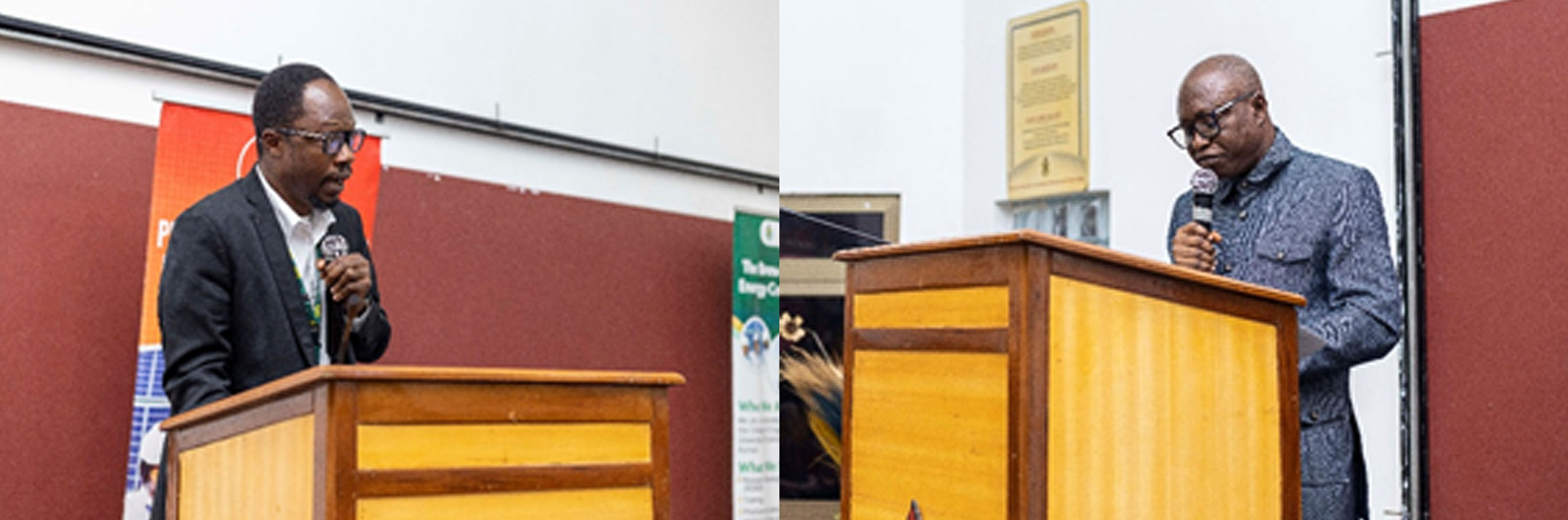
At KNUST, Professor David Ato Quansah, Director of the Brew-Hammond Energy Centre, traced the roots of Ghana’s first dedicated postgraduate programme in Renewable Energy Technologies to 2009, with its maiden intake in 2011.
‘What began as an MSc programme has since expanded to include MPhil and PhD pathways, supported by international collaboration, including backing from the Norwegian government’’, he said.
He described ProREG as a decisive turning point. The project strengthened industry linkages, enhanced staff capacity in modern teaching methods, enabled peer-learning exchanges with Technische Universität Berlin, and equipped laboratories with solar and wind demonstration systems.
“For us, ProREG has been very impactful,” he stated, emphasising that beyond infrastructure and curriculum reforms, the initiative leaves a lasting legacy of partnerships, strengthened institutional capacity, and now a structured knowledge product in the form of the book.
At UENR, Vice-Chancellor, Professor Elvis Asare-Bediako described the publication as “a chronicle of our journey, our lessons, our impacts, and our aspirations,” adding that it provides a practical blueprint for transforming tertiary engineering education in Ghana and across Africa.
He acknowledged longstanding criticism that higher education in many developing countries has been overly theoretical. According to him, ProREG institutionalised a profound pedagogical shift at UENR, embedding student-centred and problem-based learning across programmes.
“We are no longer only teaching engineering,” he noted. “We are engineering solutions for sustainable development.”
He highlighted tangible outcomes: students designing mini-grids for rural electrification, conducting industrial energy audits, developing biomass solutions for waste management, and building solar forecasting models to enhance grid stability, all grounded in Ghana’s socio-economic realities.
Both institutions underscored a shared achievement on closing the competency gap between academia and industry.