
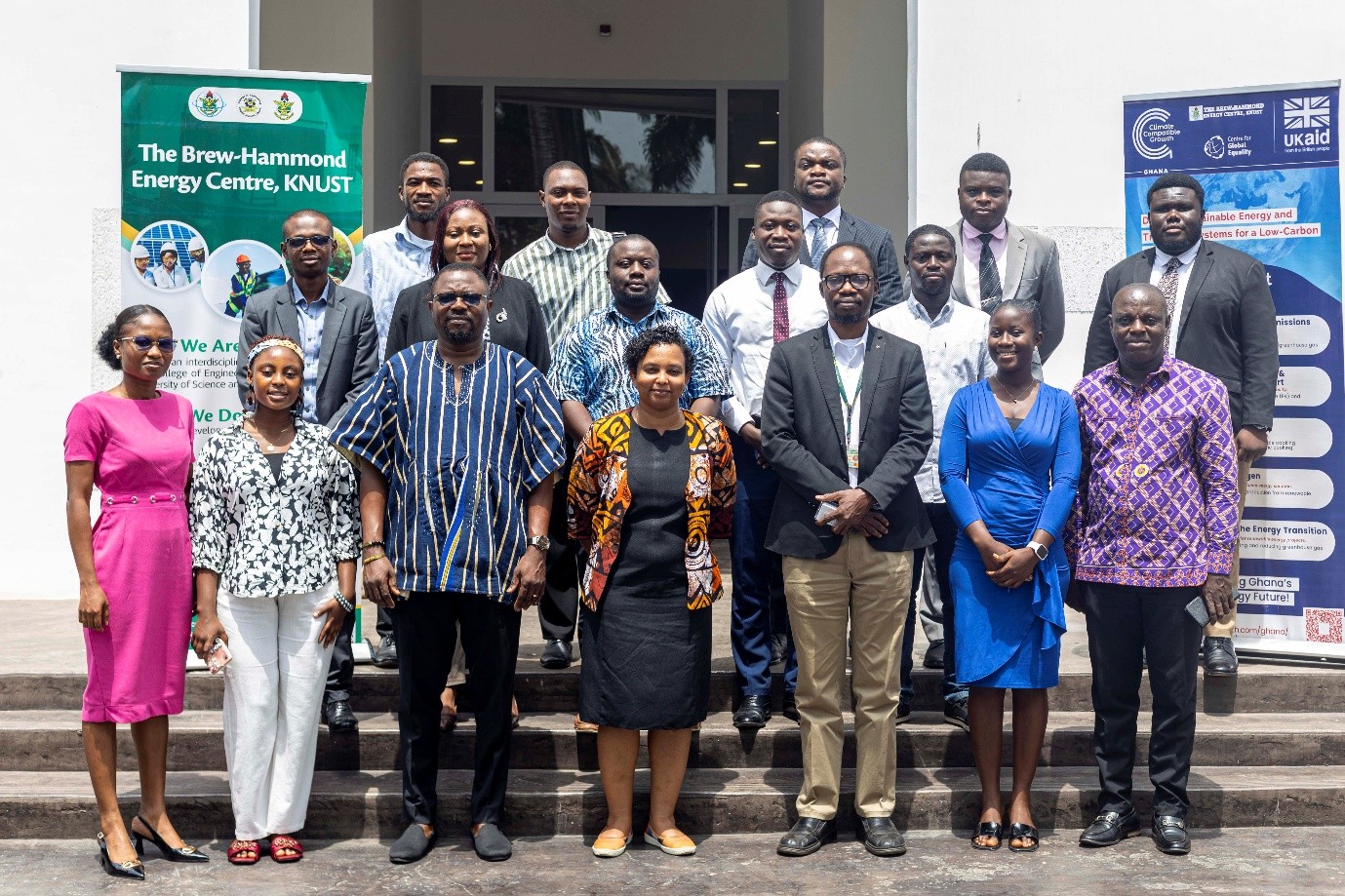
The Brew-Hammond Energy Centre (TBHEC) at the Kwame Nkrumah University of Science and Technology, Kumasi, (KNUST) has held a stakeholder consultation workshop on Scaling up Distributed Solar Photovoltaic (PV) Adoption in Ghana, with particular focus on the finance and telecommunications sub-sectors.
The workshop, held on 25th February 2026, brought together representatives from industry, financial institutions, telecommunications companies, and policy bodies to deliberate on strategies for accelerating solar PV deployment within the commercial sector.
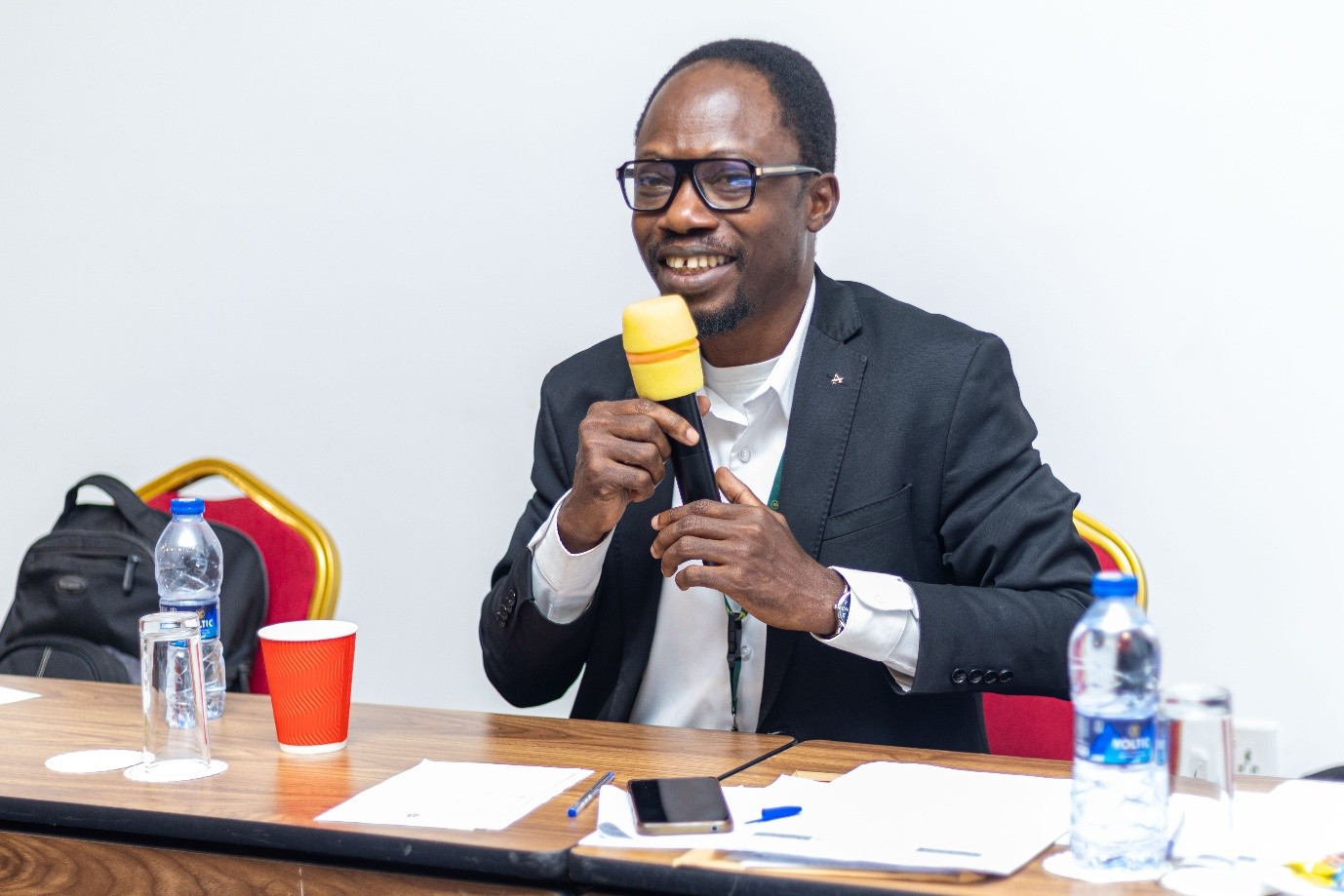
According to Professor David Ato Quansah, Project Lead and Director of the Centre, the study sought to understand the dynamics, barriers, and enablers influencing the uptake of distributed solar PV systems in Ghana’s commercial institutions, specifically within the finance and telecommunications sectors.
He noted that while the financial sector plays a key role in mobilising capital for renewable energy investments, the telecommunications sector remains central to national connectivity, with infrastructure spread across the country that presents significant opportunities for decentralised clean energy solutions.
Presenting the findings, Prof. Quansah revealed that solar PV adoption across the finance and telecommunications sectors is uneven but steadily increasing, while some institutions have made significant investments in solar systems, others remain cautious due to financial and operational uncertainties.
“Across both sectors, adoption is uneven but steadily growing. Some institutions report perceived cost savings, while reputation and sustainability requirements are emerging as strong drivers of investment decisions,” he noted.
The study identified rising electricity costs, regulatory requirements, and the desire to project strong green credentials as key motivations behind solar PV deployment. It also examined internal decision-making processes within institutions and the practical experiences of deploying and managing installations.
Highlighting the broader significance of the finance sector, Prof. Quansah stressed that financial institutions play a key role in mobilising capital for renewable energy expansion.
“If we are serious about scaling distributed solar PV, the financial sector must be positioned not just as a consumer of solar technology, but as a catalyst for renewable energy financing,” he said.
Prof. Quansah revealed that the telecommunications sector was equally identified as strategic, given its nationwide infrastructure footprint. He suggested that telecom companies could leverage their presence across the country to test additional renewable energy technologies such as wind and biofuel-based electricity generation.
To address barriers limiting uptake, the study recommended equipment standardisation and personnel certification to boost market confidence. It further urged government ministries and agencies to support banks in accessing global climate funds and called on the Ministry of Energy and Green Transition to fast-track and expand net-metering implementation.

The workshop ended with an interactive question-and-answer session, providing participants the opportunity to make inputs into the project and seek clarifications aimed at strengthening the study’s outcomes. Stakeholders shared perspectives, raised critical concerns, and offered suggestions to refine policy recommendations and implementation strategies.
The research underpinning the consultation was undertaken by a team from The Brew-Hammond Energy Centre in collaboration with University College London. It forms part of the Climate Compatible Growth (CCG) programme funded by the United Kingdom’s Foreign, Commonwealth and Development Office (FCDO). The project is led by Professor David Ato Quansah as Principal Investigator and co-led by Dr. Emmanuel Kofi Gavu.