
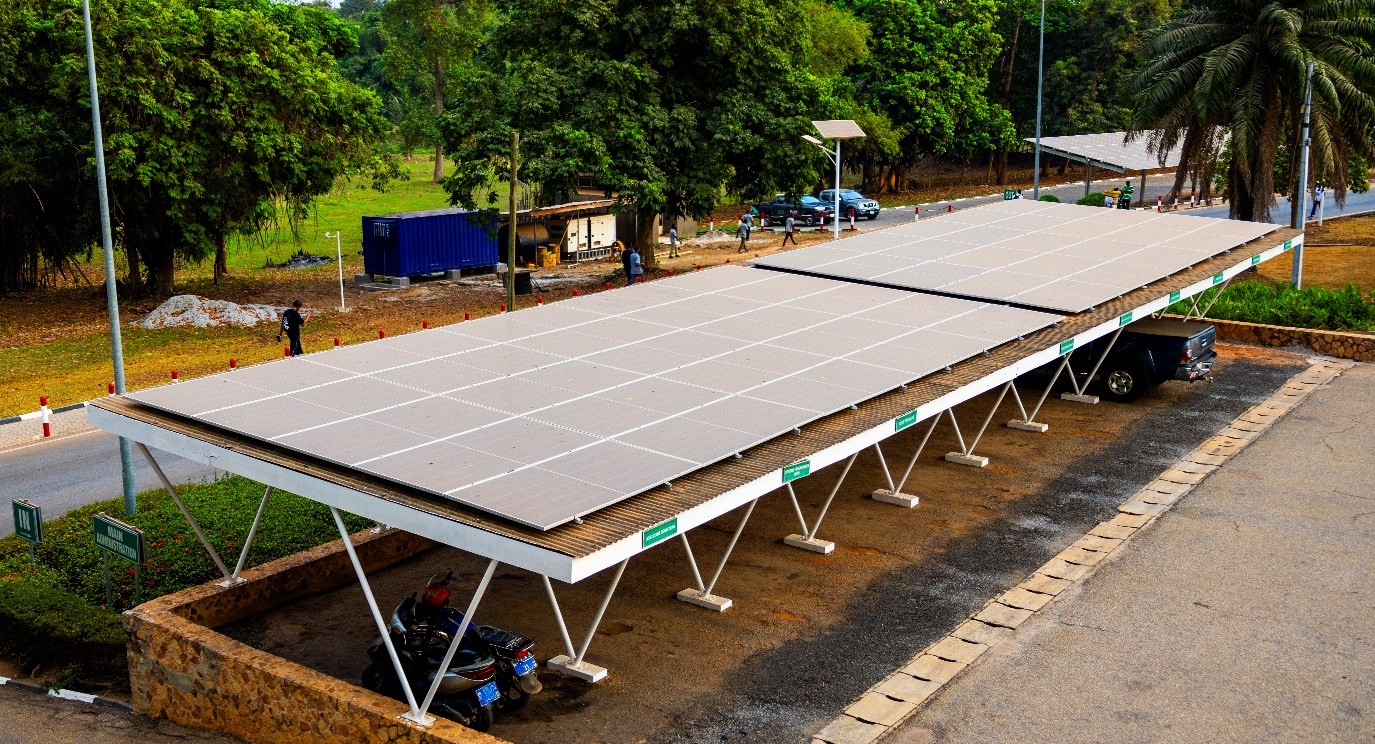
A new policy brief authored by researchers from The Brew-Hammond Energy Centre at the Kwame Nkrumah University of Science and Technology (KNUST) reveals that Ghana has successfully built robust local technical capabilities in its solar photovoltaic (PV) sector, but policy constraints threaten to slow further progress.
The brief, titled ‘Local Content and Capability Development in Ghana’s Solar Sector: Lessons for Policy’, highlights that local engineers at the Bui Power Authority (BPA) and the Volta River Authority (VRA) have achieved Intermediate Innovative Capability in utility-scale solar PV project execution. This level of capability indicates that Ghanaian engineers can independently design, operate, maintain, and modify solar installations with minimal external supervision which marks a significant shift beyond routine operations and maintenance.
The study, based on a PhD thesis by Paula Edze of KNUST’s Department of Planning and co-authored by Professor Francis Kemausuor, finds that local content requirements (LCRs) have successfully facilitated knowledge transfer and improved the competitiveness of both foreign and local firms.
However, the brief notes that while LCRs have enhanced local technical skills, they have not significantly influenced procurement practices in the solar PV industry
A comparative analysis of two major projects; VRA’s Lawra and Kaleo solar plants (funded through development finance) and BPA’s Bui Hydro-Solar Hybrid plant (commercially financed) shows that development finance models generate stronger local job creation and broader local linkages
Development Finance Institutions (DFIs), through strict environmental and social governance (ESG) requirements, ensure stronger local subcontractor engagement and labour integration compared to commercially financed projects.
Despite technical gains, the sector faces structural challenges. Ghana remains heavily dependent on imported high-value components such as panels and inverters
Additionally, the policy mandating foreign firms to transition to 51% local ownership by their tenth year of operation is described as unrealistic and a deterrent to long-term foreign direct investment
The authors recommend continuously monitoring and updating LCRs to align with global technological trends, integrating auxiliary solar supply chains into the African Continental Free Trade Area (AfCFTA), and leveraging development finance mechanisms to maximize job creation
Rather than competing in high-risk manufacturing of core components, the brief suggests Ghana focus on niche auxiliary products, including DC cables, mounting structures, breakers, and installation hooks, where local firms are already competitive. Ghana could expand regional markets for these intermediate goods and strengthen its position within Africa’s renewable energy value chain by leveraging AfCFTA.
The policy brief is based on a PhD thesis supported by the Ministry of Foreign Affairs of Denmark under the project “Energy Struggles: Renewable Energy in Africa”