



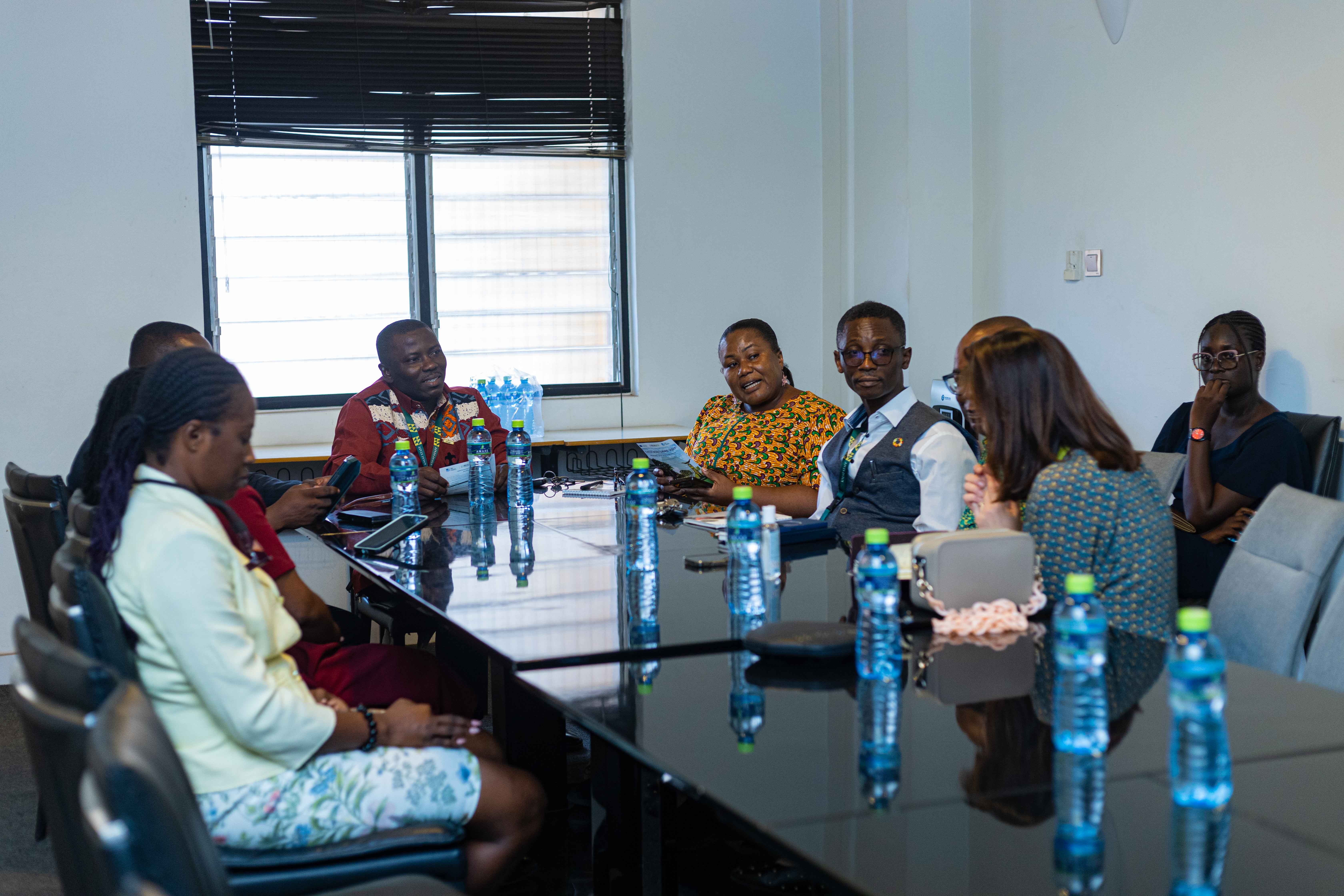
As part of a monitoring and evaluation mission conducted by the European Education and Culture Executive Agency (EACEA), the BUCABUMA Project team visited The Brew-Hammond Energy Centre at Kwame Nkrumah University of Science and Technology (KNUST) to learn from its experiences and draw lessons from its participation in the earlier Fostering Research and Intra-African Knowledge Transfer through Mobility and Education (FRAME) Project under the Intra-Africa Academic Mobility Scheme.
The visit provided an opportunity for both teams to exchange insights and identify practical approaches for strengthening the implementation, coordination, and overall effectiveness of the BUCABUMA Project.
Welcoming the delegation on behalf of the Director of The Brew-Hammond Energy Centre, Prof. David Ato Quansah, Prof. Joseph Oppong Akowuah expressed the Centre’s commitment to supporting the initiative and sharing valuable experiences gained through the implementation of the FRAME Project.
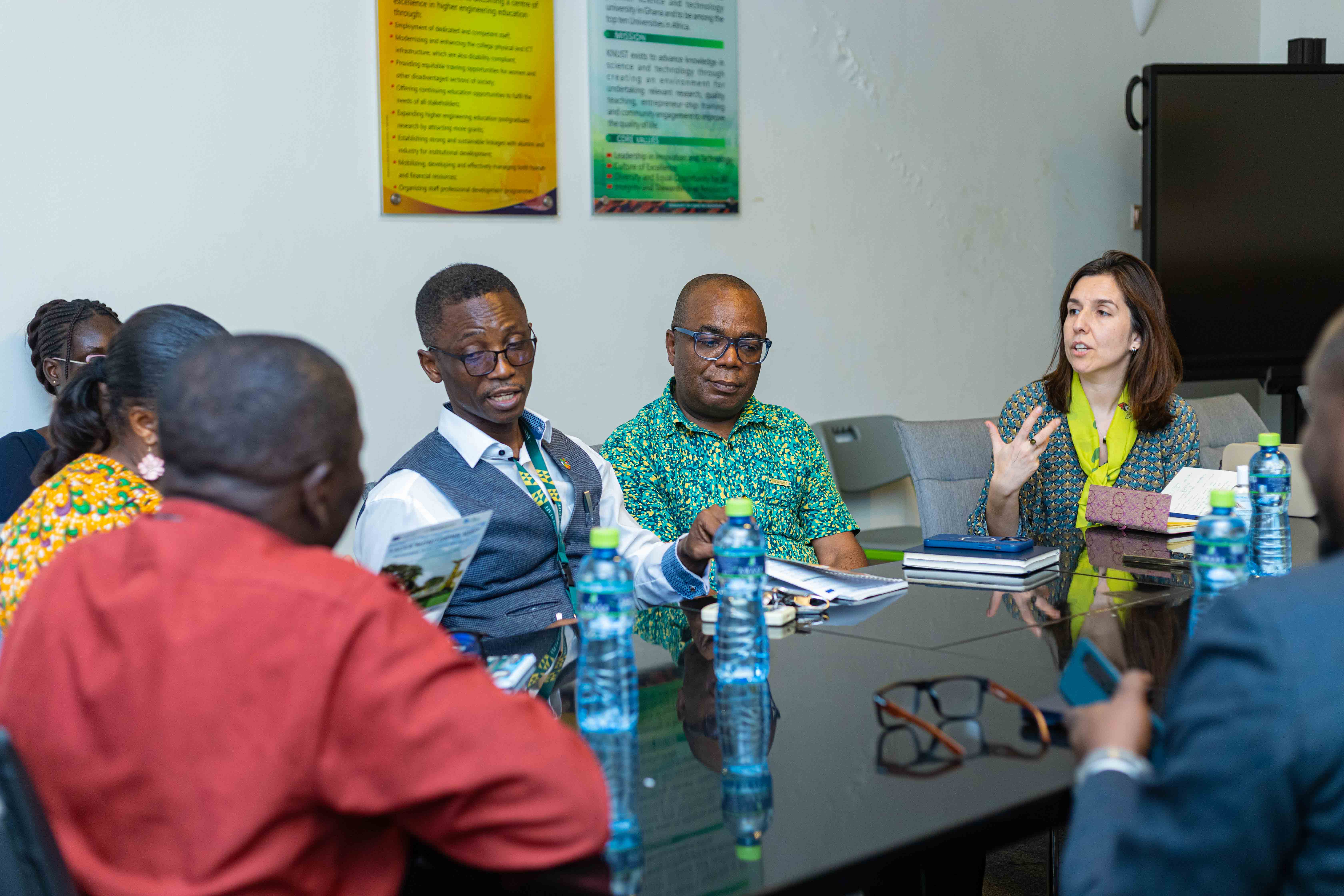
Speaking during the visit, EACEA Monitoring and Evaluation Officer, Ms. Elif Memis Marsman, underscored the importance of learning from previous projects, particularly the challenges encountered and the solutions adopted during implementation.
“These experiences and lessons should inform the implementation of the current mobility project, given the similarities between the two initiatives,” she noted.
The Coordinator of the FRAME Project, Prof. Lena Dzifa Mensah, reflected on some of the key challenges encountered during project implementation.
“Challenges relating to student selection, access to suitable insurance coverage, documentation requirements, tuition fee arrangements, and credit transfer processes were among the issues we had to address during project implementation. These challenges complicated the coordination of student mobility and affected the smooth execution of project activities,” she explained.
Despite these difficulties, Prof. Mensah highlighted several notable achievements of the FRAME Project, including the successful publication of research outputs by 12 participating students. She encouraged the BUCABUMA team to leverage the lessons learned from FRAME, implement proactive measures to address potential challenges, and remain focused on delivering impactful academic and research outcomes.
The BUCABUMA Project is a European Union-funded Intra-Africa Academic Mobility initiative led by Prof. Francis Davis, Director of the TCC International Centre for Innovation, Manufacturing, Technology Transfer and Entrepreneurship (TCC-CIMET) at KNUST, with support from the European Education and Culture Executive Agency (EACEA).