
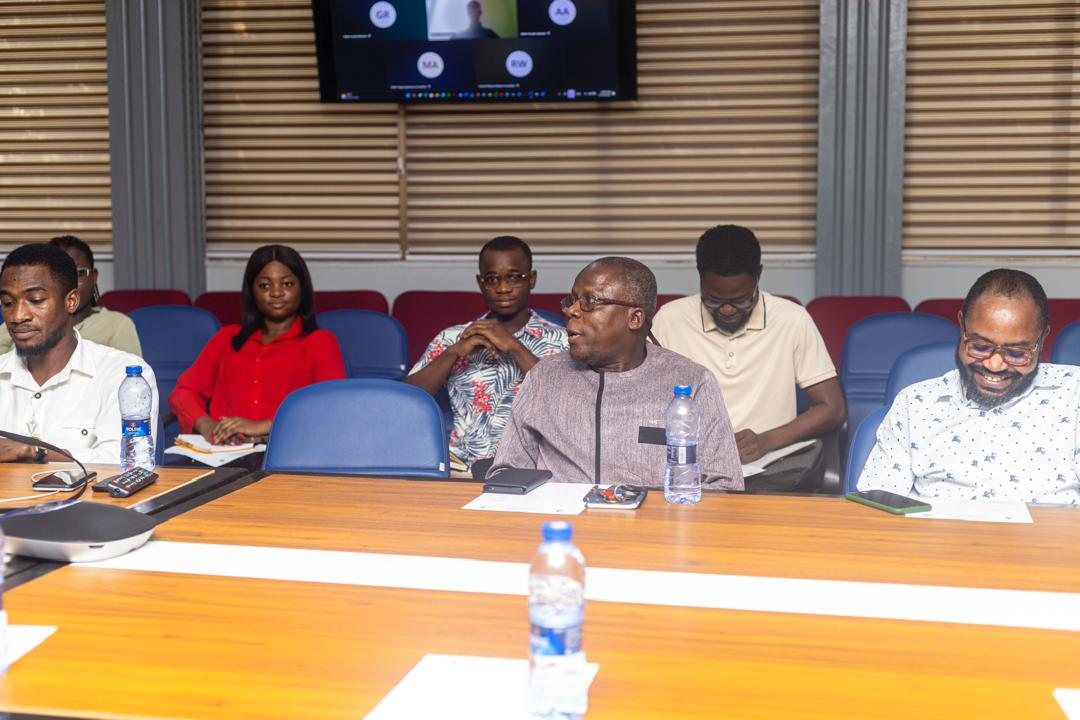
The Brew-Hammond Energy Center, in collaboration with the Climate Compatible Growth (CCG) Programme, has hosted a workshop to deepen understanding of how political economy dynamics shape sustainable energy systems.
The workshop, facilitated by Dr. Gerald Arhin of CCG’s Political Economy Unit and a Research Fellow at University College London, brought together academics, energy experts and research assistants to examine how modelling processes can more accurately reflect the political realities that determine policy success.
Dr. Arhin introduced participants to the Political Economy and Modelling (PEM) toolkit, designed to strengthen energy modelling for green infrastructure. He explained that the toolkit is being developed to provide context-specific evidence capable of making energy models more relevant to policy outcomes.
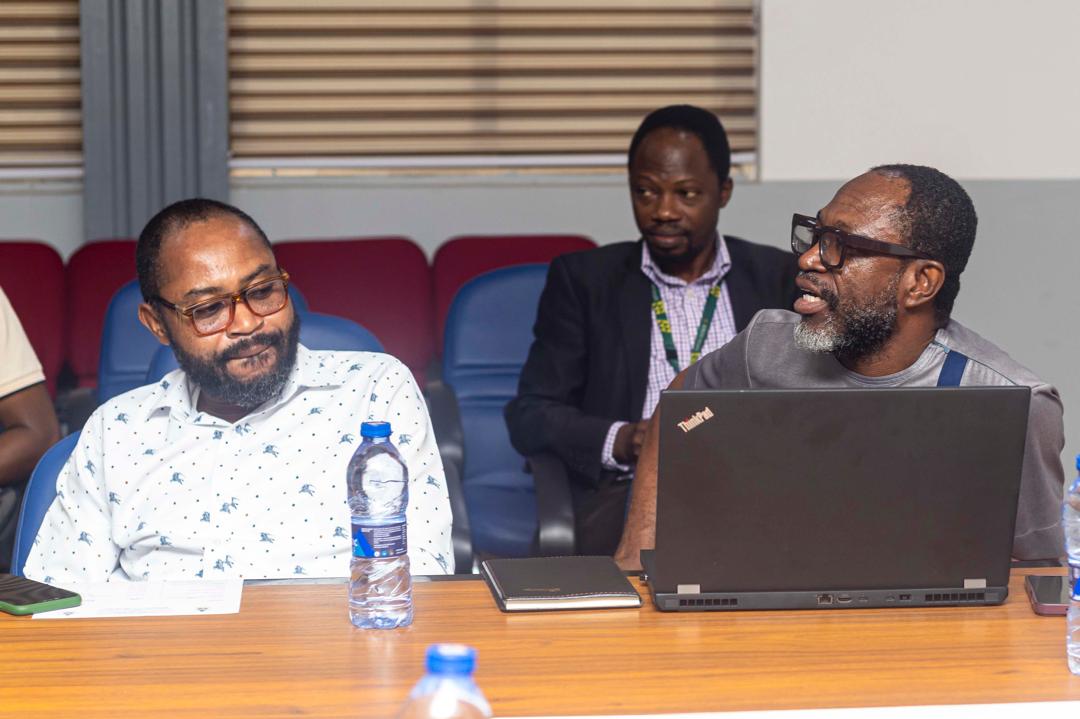 “The political economy unit is one of several units within CCG, and it’s a cross-cutting unit working with different research groups. The idea is to support the programme in thinking and working politically so we generate context-specific evidence, rather than assuming strategies will work everywhere,” he said.
He outlined the purpose of the PEM toolkit as a guide to embedding political thinking at every stage of modelling, from problem definition and institutional analysis to model selection, data gathering, scenario creation and interpretation of results. He noted that such an approach helps modellers produce insights that are both technically sound and politically feasible.
He stressed that integrating political economy improves model realism and increases the likelihood that recommended policies can be adopted and implemented.
“Adoption and implementation are shaped by different forms of interest and power. A policy can be adopted, but implementation may not follow through. It’s important to understand the barriers or enablers that influence that transition,” he explained.
Dr. Arhin, however, cautioned that political considerations should not distort modelling processes. Incorporating political dynamics, he said, is not about tailoring models to suit political agendas. “The idea is not that modelling should always emphasise or suit political interests, especially when such interests undermine sustainable development pathways,” he emphasized.
“But understanding why these interests exist helps generate grounded evidence that can shape them or strengthen the bargaining power of coalitions that support green transitions.”
He added that by integrating political economy more intentionally into energy systems modelling, stakeholders gain clearer insight into what is technically achievable and what is practically implementable within existing political and institutional environments.