The World Bank’s Energy Sector Management Assistance Programme (ESMAP) has agreed to provide an amount of five hundred twenty three thousand United States Dollars (US$523,000) to The Energy Center, KNUST from the Clean Energy Investment Framework Multi Donor Trust Fund for a Solar Energy Capacity Upgrading Project (SolarCUP). A contract for the grant has been signed by the Vice Chancellor of KNUST, Prof W.O. Ellis and the World Bank Country Director, Mr. Ishak Diwan.
The main aim of SolarCUP is to upgrade the capacity of West African Partners in the Renewable Energy Education Project (REEP) supported by the EDULink Programme of the European Union’s Africa, Caribbean and Pacific (ACP) Secretariat.
The SolarCUP has 3 main components:
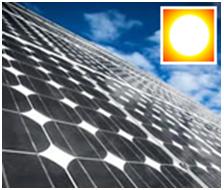
1. Hands-on Training (Learning-by-doing) - consists of design and installation of one roof-mounted 20 kWp solar PV grid-connected systems on KNUST campus, on which technical performance measurements and data analysis will be undertaken. This will bring the total installed capacity of grid-connected PV systems on campus to 24 kWp, and will offer training opportunities for technicians and engineers.
2. Learning by Analysis- TEC will carry out an assessment of the economic and financial viability of deploying medium-scale CSP (Concentrated Solar Power) in the ECOWAS sub-region, particularly in the Sahelian countries of Burkina Faso, Niger and Mali in collaboration with a target group of practicing engineers and policy makers affiliated with W APP (West African Power Pool).
3. Learning by Sharing- under this component TEC will organize knowledge-networking activities across Africa on energy policy, solar energy technology, dissemination strategies through theme-based, web-enabled real time seminars and learning and knowledge sessions bringing together African energy experts from Universities, NGO's, government agencies, centers of energy research and development, energy businesses.
The project would also provide among others; computers with a set of specialized software and data logging equipment for solar systems analysis, and weather stations for solar radiation monitoring.
A similar agreement is to be signed with TEC’s REEP partner in Ouagadougou (2iE), with the overall aim of positioning the two institutions to become capacity building nodes for the ECOWAS Regional Center for Renewable Energy and Energy Efficiency (ECREEE).
World Bank ESMAP Grant for The Energy Center, KNUST